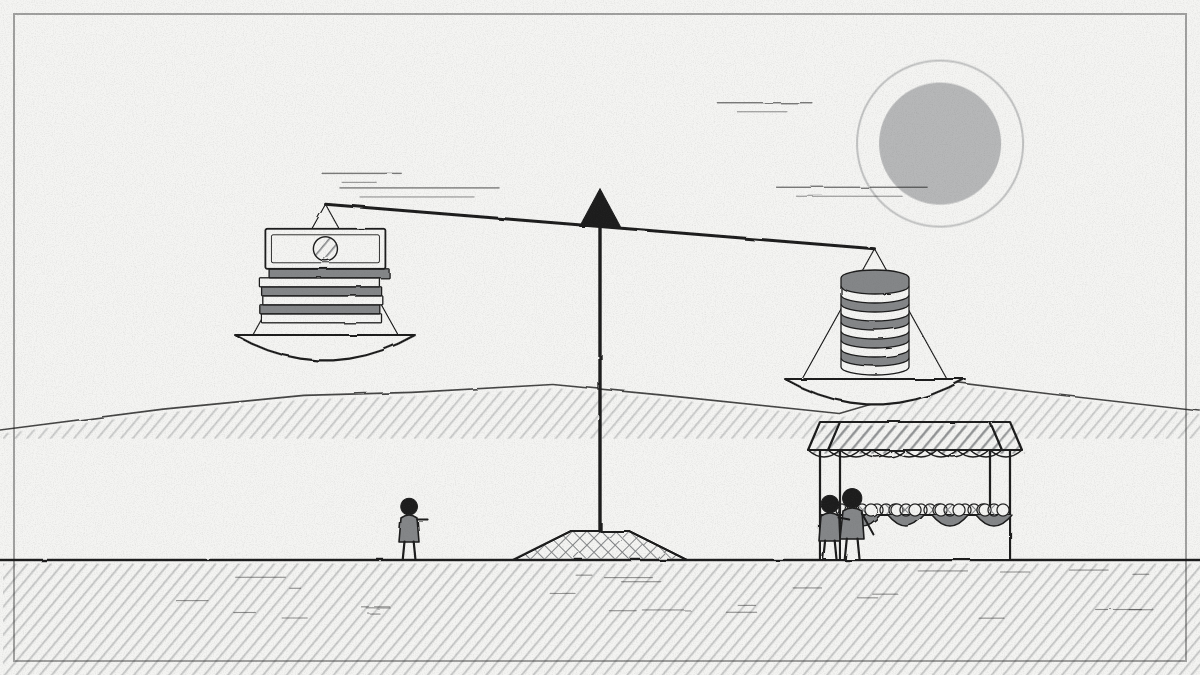
A near-flat indicative rate hides three different dollar prices and a reserve cushion that has thinned.
Congo’s franc ended the first three weeks of 2021 almost exactly where it started the year. The Banque Centrale du Congo’s indicative rate moved from CDF 1,971.80 per US dollar on 31 December to CDF 1,978.06 on 22 January, a drift of 0.3 per cent. For a currency that lost about 15 per cent of its dollar value in 2020, that is a quiet January, and the quiet has a price tag that importers and exporters should read carefully.
The month’s lesson is less about direction than about the gap between three numbers: the indicative rate near 1,978, the Kinshasa street rate at 2,025, and the CDF 2,067 that the government used to convert its new budget into dollars. Each tells a different story about who is short of dollars and who is paying for the calm.
How the BCC’s number is made
The indicative rate is a volume-weighted average of real trades, not a posted price.
According to the methodology in the BCC weekly digest of 27 January, the indicative rate weights the buying and selling rates of the central bank, authorised banks and bureaux de change by transaction volume. The parallel rate is a plain average of the buy and sell quotes at the main exchange places in Kinshasa. Because the first is dominated by large bank volumes and the second reflects retail counters, the distance between them is a clean measure of how rationed dollars are for small buyers.
The premium that refused to widen
A street premium of 2.4 per cent says the market is queuing, not panicking.
On 22 January the Kinshasa parallel rate stood at CDF 2,025 against the indicative 1,978.06, a premium of about 2.4 per cent. It was 2,019.50 on 5 January. Across January the daily steps in the indicative rate were mostly a few hundredths of a per cent. The year before, the picture was different: the dollar cost CDF 1,683.95 on 31 January 2020, so the franc has lost roughly 15 per cent against it in twelve months. Calm now follows a large adjustment, it does not replace one.
Who is paying for the calm
Thin central-bank dollars and a policy rate of 18.5 per cent are doing the work that a deeper market would normally do.
The same digest shows the central bank’s own foreign-exchange position at about US$680m on 21 January, against US$1,031m at the end of 2019, while the policy rate sits at 18.5 per cent, positive in real terms against inflation of about 15.7 per cent. High real rates make franc holdings pay, which is one reason demand for dollars has not run away. That is a policy choice with a bill attached: it is paid by borrowers in francs, which is part of the credit story in our companion piece on bank liquidity.
The budget’s own exchange rate
The CDF 2,067 planning rate is 4.5 per cent weaker than the market, and it will be tested.
Deskeco reported that the 2021 budget, promulgated at CDF 14,235.2bn, equals US$6.886bn at CDF 2,067 per dollar. That rate sits 4.5 per cent above the indicative rate and 2.1 per cent above the street rate. A Treasury that plans for a weaker franc than the market is building a cushion, and one that spends against it will find the cushion shrinking if the market drifts toward the planning rate. The digest stops on 22 January, one week before Prime Minister Sylvestre Ilunga Ilunkamba resigned ahead of a censure motion, so the real test of the calm lies in the next few weekly readings.
What to do with a flat franc
Use the calm to fix prices and costs, because calm is the cheapest moment to hedge.
Businesses that earn francs and pay dollars should lock in supplier terms and shorten receivable cycles while volatility is low. Those that invoice in dollars should avoid pricing contracts at the 2,025 street rate and instead write a clause that resets at the BCC indicative rate, which is published daily. Treat CDF 2,067 as a stress case for budgets, since the government itself used it. A flat January is information, not insurance.
Sources
- Banque Centrale du Congo – Condensé hebdomadaire d'informations statistiques n°03 (27 January 2021)
https://www.bcc.cd/statistiques/condense-informations-statistiques/2021-01-27 - Banque Centrale du Congo – Notes de conjoncture (generic page)
https://www.bcc.cd/publications/notes-de-conjoncture - Deskeco – RDC: Félix Tshisekedi promulgue le Budget 2021 chiffré à 6,886 milliards USD (1 January 2021)
https://deskeco.com/2021/01/01/rdc-felix-tshisekedi-promulgue-le-budget-2021-chiffre-6886-milliards-usd - Zoom Eco – RDC : le premier ministre Sylvestre Ilunga Ilunkamba vient de rendre le tablier (29 January 2021)
https://zoom-eco.net/a-la-une/rdc-le-premier-ministre-sylvestre-ilunga-ilunkamba-vient-de-rendre-le-tablier/


