Two delivery systems share one headline: a US$400m water programme and a US$300m forest project.
The World Bank approved US$700 million for Congo in June 2023 across two projects that share a press release and little else. The first is a US$400 million credit from the International Development Association for Phase 1 of the Water Supply and Sanitation Access Programme, approved on 9 June, according to the Bank’s release of 14 June. The second is the US$300 million Forest and Savanna Restoration project, approved on 2 June.
The water programme is a civil-works pipeline run through utilities. The forest project is a land, farming and fuel-market programme run through communities and private operators. They need different contractors, different timelines and different measures of success, and a business reader needs to read them as separate markets.
The water pipeline
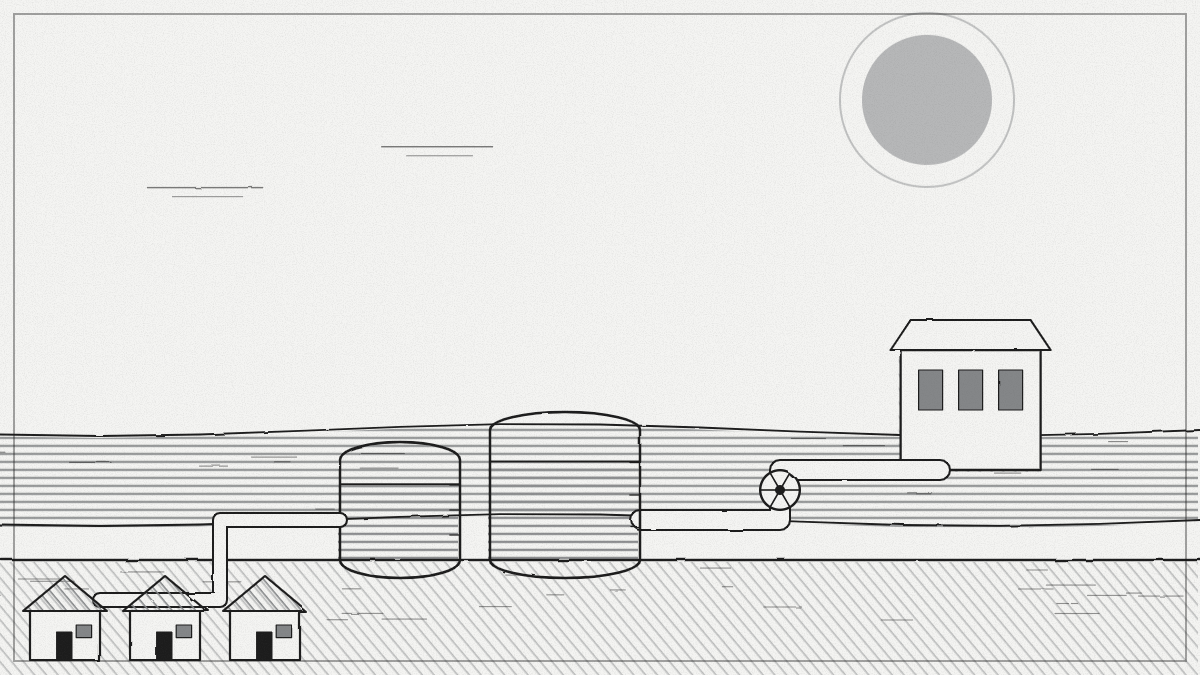
A US$400 million first phase of an 11-year, US$1.25 billion programme reaches 2.9 million people.
Phase 1 covers the provinces of Kasai, Kasai Central, Kasai Oriental and Kwilu, and targets 2.9 million people for drinking water and 2 million for sanitation, using climate-resilient, solar-powered systems. The full envelope over 11 years is US$1.25 billion. For scale, Congo’s population of 95.0 million grows 3.0 per cent a year, according to the BCC’s digest of 14 June, so the country adds about 2.85 million people annually. The first phase serves roughly one year of population growth in four provinces.
The BCC digest also shows national potable-water production of 309.8 million cubic metres in 2022, up 8.3 per cent, and 81.6 million cubic metres in the first quarter of 2023, up 7.1 per cent from 76.2 million. Supply growth is running well ahead of population growth, but it is concentrated where utilities already operate. The Kasai towns are the gap the programme is meant to close.
Country Director Albert Zeufack tied the water gap to malnutrition and stunting in the Bank’s release, which explains why sanitation sits beside drinking water in the targets: a standpipe without latrines does not shift child health outcomes.
The forest and fuel project
US$290 million of IDA credit and a US$10 million clean-cooking grant aim at charcoal, the city’s real fuel.
The project combines US$290 million of IDA credit with US$10 million from the Energy Sector Management Assistance Programme, and aims to bring 640,000 hectares under improved management, reach 1.2 million people with livelihoods and 2.5 million with clean cooking. The Bank’s project information document of 17 April explains why cooking is in a forest project: over 95 per cent of Congolese households cook with biomass, and growing populations relying on shifting cultivation and wood fuel are the main driver of forest loss. Congo has lost about 6 million hectares of primary rainforest since 2000, and cleared about 500,000 hectares in 2021 alone.
The Bank’s practice manager for the project, Africa Olojoba, said it responds to strong local-market demand for wood energy and sustainable foodstuffs, which frames the commercial logic: the project funds supply chains that sell.
Money is allocated by component: US$20 million for the shift to cleaner cooking, US$13 million for forest-data measurement and climate-finance access, and US$30 million for project management.
The mechanism: why wood fuel meets plantations
Cities buy charcoal, so the project plants near the cities that buy it.
Kinshasa is the model market: only 12 per cent of its households use improved stoves, and a single operator supplies liquefied gas. The Bank’s document identifies nearly 700,000 hectares of degraded savanna around large cities that could host agroforestry and reforestation plantations. Plantations near the buyers shorten haulage and give charcoal producers a legal feedstock. The BCC digest puts formal log output at 109,851 cubic metres and sawn timber at 34,794 cubic metres in 2022, tiny against the fuelwood demand of 90 million people, which is why the Bank is working on energy demand and not just on forest policing.
What the property and construction markets should expect
Approval is a rung on the ladder, not a contract: signing, effectiveness and procurement come next.
Water works raise land values where connections arrive, and plantation concessions raise questions of tenure that the land-use planning component is meant to settle. Contractors for solar-powered pumping, pipe and storage should register on the Bank’s procurement notices and study the borrower’s procurement plan, since Phase 1 is a credit to the Ministry of Finance with the Ministry of Environment implementing the forest side. Stove manufacturers, tree nurseries and local banks financing them have the clearest private opening, because the project pays for demand creation.
Sources
- Banque Centrale du Congo – Condensé hebdomadaire d'informations statistiques n°23 (14 June 2023)
https://www.bcc.cd/statistiques/condense-informations-statistiques/2023-06-14 - World Bank – World Bank Approves $700 Million in Financing to Increase Access to Water and Sanitation and Enhance Forest Community Livelihoods in the Democratic Republic of Congo (14 June 2023)
https://www.worldbank.org/en/news/press-release/2023/06/14/drc-afe-world-bank-approves-700-million-in-financing-to-increase-access-to-water-and-sanitation - World Bank – DRC Forest and Savanna Restoration Investment Program (P178642), Project Information Document (17 April 2023)
https://documents1.worldbank.org/curated/en/099041723210512838/pdf/P1786420c82f8d02089cc026cbfa8bdf04.pdf - Banque Centrale du Congo – Statistiques (May 2023)
https://www.bcc.cd/statistiques