US$1.665 billion of local works and a US$165 million road loan show where Congolese projects stall.
Congo had more infrastructure money approved than finished in June 2023, and the BCC’s own Treasury table shows how thin the paper trail can be. Through 23 June the central bank’s cash statement records no capital spending at all for 2023, against CDF 599.9 billion in 2022, while salaries absorbed CDF 3,923 billion and so-called urgent Treasury spending CDF 1,478 billion. Money was moving; the question for investors is where it was becoming concrete.
The table sits in the BCC statistical digest of 28 June. It does not prove that nothing was built. Donor-financed works are often run through agencies outside the Treasury’s cash plan. It does show why a financing headline and a finished road are different events. Pay, at 39 per cent of everything the table records for 2023 to 23 June, sits first in the queue for Treasury cash, and projects compete behind it. A contractor waiting on a transfer is competing with the payroll for the same francs.
The ladder from proposal to power
Each rung has its own owner, its own delay and its own failure rate.
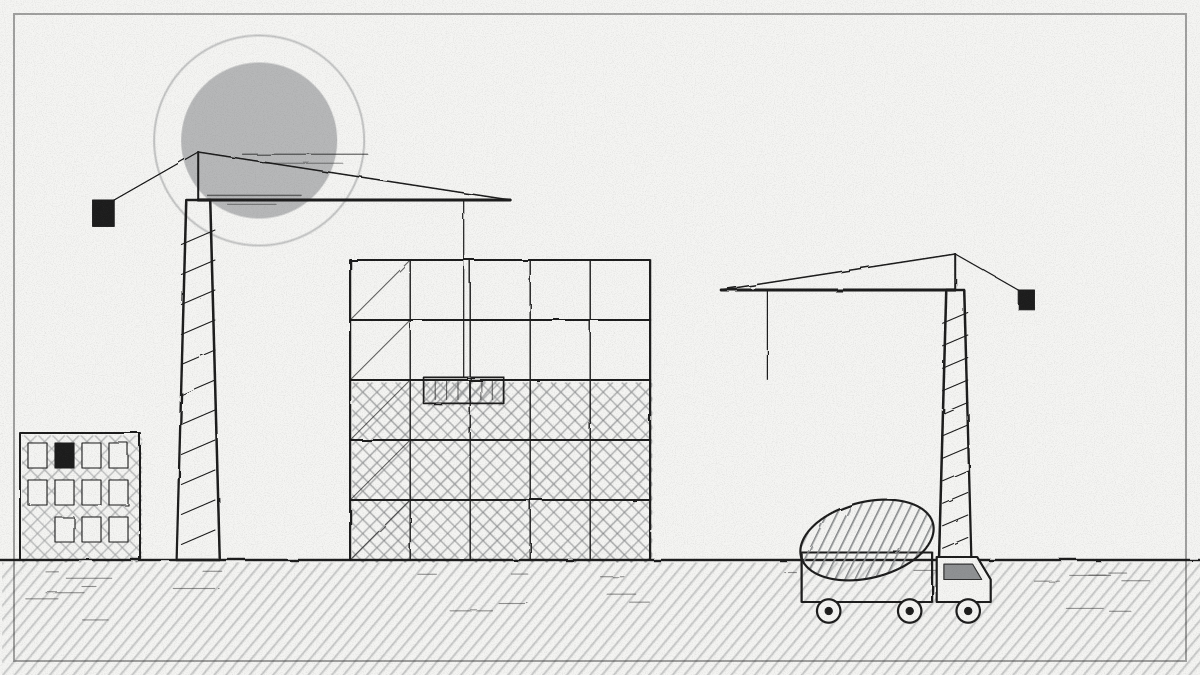
An infrastructure asset climbs a ladder: proposed, approved, financed, contracted, under construction, commissioning, operational. Congolese announcements usually reach the second or third rung and are then reported as if the seventh had been reached. The 145-territory local development programme, known as PDL-145T, shows the spread. It was announced to the Council of Ministers on 24 December 2021, carries a price tag of US$1.665 billion, and by mid-March 2023 had US$752 million made available, part of it from the IMF’s special drawing rights allocation, with US$562 million already passed to its three executing agencies, according to a government briefing reported on 15 March.
At that briefing officials said more than 2,000 works were under way across the territories and that the first buildings would be handed over in April or May, with US$10 million allotted to each territory over two years. In ladder terms, the programme was financed in part, contracted in volume and not yet delivering. The same report conceded that its cruising speed had lagged its announcement.
Where the delay actually sits
Procurement and logistics, not the pledge, set the pace of delivery.
Three mechanisms recur. First, tender timetables: contracts for a programme of this kind cannot be signed until agencies finish feasibility and bidding, and each step can take months. Second, cash transfers: if funds are released to agencies in tranches, a contractor’s mobilisation waits for the next one. Third, logistics: materials must travel across a country with few paved roads.
The African Development Bank’s approval in November 2022 of US$165 million for phase 1 of the DRC-Angola corridor illustrates the first rung well: money for the bituminisation of a 385-kilometre road section in the Kasai provinces and 90 kilometres in Angola was approved, but contracting, construction and commissioning are separate rungs, each needing its own evidence.
The price of the gap in the interior
A missing road or a late wagon shows up in a loaf of bread.
In Mbuji-Mayi, one city on that corridor, Radio Okapi reported in May that bread had gone from CDF 500 to CDF 800 in two weeks. Bakers blamed electricity shortages and the failure of rail wagons to deliver wheat flour, with one baker saying he had waited for a wagon at Likasi for eight months. The same city that stands to gain from a new road pays today for the old one. Approved capital changes nothing at the baker’s oven until the lower rungs are built.
What an investor or contractor should do
Underwrite on milestones, and insist on the lifecycle stage in every briefing.
A lender or supplier looking at a Congolese project should ask which rung it is on and what the next transfer depends on. A contractor should price in payment delays between tranches and pre-agree the sequence of mobilisation. A buyer of materials should plan stock around the rail and road realities rather than the project calendar.
The practical test for the second half of 2023 is delivery data, not pledges. The BCC’s quarterly capital-spending line and the programme’s own handover counts will show whether the stage after financing is moving. Until they do, treat approved sums as an option on construction, not as construction.
Sources
- Banque Centrale du Congo – Condensé hebdomadaire d'informations statistiques n°25 (28 June 2023)
https://www.bcc.cd/statistiques/condense-informations-statistiques/2023-06-28 - Banque Centrale du Congo – Statistiques
https://www.bcc.cd/statistiques - Scoop RDC – PDL-145T : En avant marche, bientôt plus de 2000 ouvrages en cours de réalisation (15 March 2023)
https://scooprdc.net/2023/03/15/pdl-145t-en-avant-marche-bientot-plus-de-2000-ouvrages-en-cours-de-realisation-disponibles/ - African Development Bank – La Banque africaine de développement apporte 165 millions de dollars pour la phase 1 du corridor RDC-Angola (November 2022)
https://www.afdb.org/fr/news-and-events/press-releases/la-banque-africaine-de-developpement-apporte-165-millions-de-dollars-pour-realiser-la-phase-1-du-projet-de-construction-du-corridor-economique-transnational-republique-democratique-du-congo-angola-56998 - Radio Okapi – Kasaï-Oriental : hausse de prix de pain à Mbuji-Mayi (21 May 2023)
https://www.radiookapi.net/2023/05/21/actualite/societe/kasai-oriental-hausse-de-prix-de-pain-mbuji-mayi