A 450 km road was announced without a route, a budget or a date, in a year when capital spending thinned.
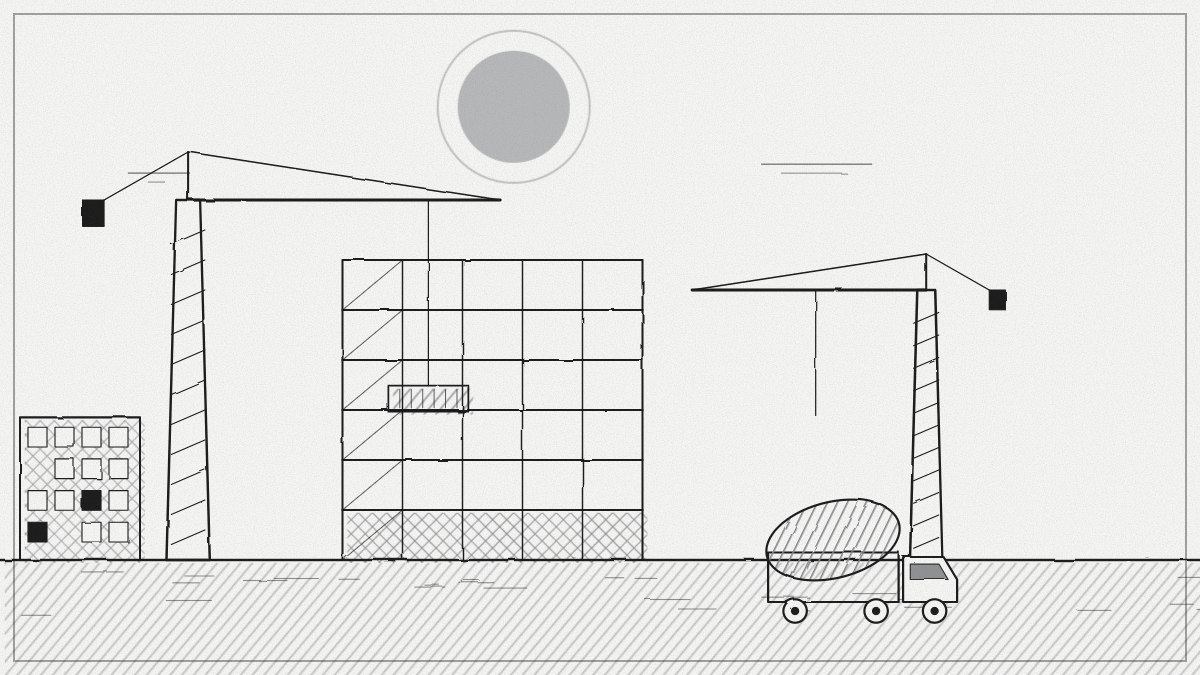
By 20 May 2025 Congo’s government had signed a protocol with a Chinese company, Zhongshi Wozen Technology Co. LTD, for a 450 km highway between Kinshasa and the Atlantic port of Banana, passing through Matadi. The announcement came without a route, a budget or a timetable. In the same weeks the Treasury’s own figures showed capital spending running at 7.7 per cent of outlays. Financing and execution are two different things, and the gap between them is where Congo’s infrastructure timelines are decided.
Agence Ecofin reported the protocol on 20 May. The deep-water port at Banana, the country’s planned Atlantic gateway, is already under construction, according to the Ministry of Infrastructure. The road that would feed it is, for now, a signature.
Two projects at two different stages
The port has moved down the lifecycle ladder; the highway is still on the first rung.
Infrastructure moves through proposal, approval, financing, contracting, construction, commissioning and operation. Banana’s port is in construction. The highway sits at proposal: a protocol records an intention between the state and a contractor, and the Ecofin report says the exact route is yet to be determined, no budget is disclosed and no timeline is given. It also notes the risk that a railway meant to serve the port has yet to materialise, and that funding and security along the route are open questions.
For a developer in Kongo Central, that matters more than the headline. A port without a road carries cargo to a quay and then hands it to the existing Matadi corridor, so the logistics cost the project was meant to cut stays where it was.
What the Treasury actually spent
Capital spending was CDF 670 billion by 25 April, barely a twelfth of outlays.
The BCC digest’s cumulative Treasury table shows capital spending of CDF 670.1 billion to 25 April, about US$235 million, or 7.7 per cent of total expenditure of CDF 8,753 billion. For 2024 as a whole, capital spending was CDF 3,538 billion, or 12.2 per cent. The monthly path is lumpy: CDF 322 billion in January, then CDF 55 billion in February, CDF 149 billion in March and CDF 144 billion in April.
Exceptional expenditure, a category that includes security costs, reached CDF 2,775 billion in the same period, more than four times capital spending. The pattern fits the IMF’s account that the eastern conflict is straining public finances.
Why approved capital does not turn into assets
Money has to pass procurement, security and cash-release gates, and each gate leaks.
A project is first an appropriation, then a contract, then a payment schedule. The state’s cash is first committed to wages, which are a third of outlays, and to emergencies. Capital lines are paid after, and contractors who are paid late slow down or stop. The IMF programme recalibrated in May commits to preserving social and investment spending while rationalising non-priority items, which is the right instruction in the wrong cash position.
That is why a protocol proves less than it looks. It can be signed in a day. The cash that follows it depends on a budget that, by 25 April, had already run a deficit of CDF 1,817 billion.
What this means for property and construction
Land and contractor exposure along a corridor should follow financing milestones, not announcements.
The nearest real demand is at Banana itself and at the Matadi-Kinshasa road that already carries the traffic, where warehousing, truck parks and fuel stops will be needed once the quay operates. Demand along a highway whose route is undecided cannot be underwritten. Contractors working for the state face a payment queue that is shorter for security than for roads.
The decision for investors
Gate every commitment on the lifecycle: route gazetted, financing signed, contractor paid.
Developers and lenders should take positions around Banana only as each gate closes, and should treat the BCC’s capital-spending line as a monthly early-warning signal. A rise from 7.7 per cent towards the 2024 level of 12 per cent would mean the cash is arriving. Until then, assets that depend on the highway are options, not projects.
Sources
- Banque Centrale du Congo – Condensé hebdomadaire d'informations statistiques (28 May 2025)
https://www.bcc.cd/statistiques/condense-informations-statistiques/2025-05-28 - Banque Centrale du Congo – Condensé hebdomadaire d'informations statistiques n°20 au 16 mai 2025, tableau III.2 (21 May 2025)
https://resources.bcc.cd/publications/condense-informations-statistiques/condense_dinformations_statistiques_ndeg_20_au_16_mai_2025.pdf - Agence Ecofin – DRC Plans 450 km Highway to Link Kinshasa with Banana Port (20 May 2025)
https://www.ecofinagency.com/news-infrastructures/2205-46952-drc-plans-450-km-highway-to-link-kinshasa-with-banana-port - Actualite.cd – RDC : le FMI et Kinshasa trouvent un accord sur la première revue du programme soutenu par la Facilité élargie de crédit (13 May 2025)
https://actualite.cd/index.php/2025/05/13/rdc-le-fmi-et-kinshasa-trouvent-un-accord-sur-la-premiere-revue-du-programme-soutenu-par