Who Benefits From Likumbi Lya Mize and the Makishi Tradition?
Every plan to monetise a tradition runs into the same wall: some of what makes it valuable is precisely what cannot be sold. The Makishi masquerade grew inside mukanda, the initiation that turns Luvale, Chokwe, Luchazi and Mbunda boys into men, and Likumbi Lya Mize at...
Who Benefits From Likumbi Lya Mize and the Makishi Tradition?
Every plan to monetise a tradition runs into the same wall: some of what makes it valuable is precisely what cannot be sold. The Makishi masquerade grew inside mukanda, the initiation that turns Luvale, Chokwe, Luchazi and Mbunda boys into men, and Likumbi Lya Mize at...
The TEDA template: What a Suez park reveals about exporting Chinese industry
Intellectual - Frameworks & Theory · Editorial By Moakanyi Magazine · China-in-Africa · June 2026 The easy story about Chinese parks in Africa is about money crossing a border. The more interesting one is about a method crossing a border. TEDA Suez is not a...
Learning Zones: Chinese Parks Transfer Plenty of Jobs, Less of the Knowledge
Intellectual - Behavioural Intelligence · Editorial By Moakanyi Magazine · China-in-Africa · June 2026 The appealing idea is that a Chinese-built park is a laboratory: workers, officials and local firms learn industrial habits by doing. The evidence from Ethiopia...
Grow or Green: Where Chinese Energy Lands in Africa’s Two Imperatives
Intellectual - Foresight & Big Ideas · Editorial By Moakanyi Magazine · China-in-Africa · June 2026 Africa is asked to do two things that pull against each other: raise output for a young, fast-growing population, and hold down emissions in a warming world....
Who Benefits From Likumbi Lya Mize and the Makishi Tradition?
Who really benefits from Likumbi Lya Mize and the Makishi tradition? The trade-off between sacred knowledge, custodians, intermediaries and reform.
The TEDA template: What a Suez park reveals about exporting Chinese industry
China did not just build a factory in Egypt – it copied a whole development model from Tianjin to the Red Sea. Whether that template travels to the rest of Africa is the real test.
Learning Zones: Chinese Parks Transfer Plenty of Jobs, Less of the Knowledge
Chinese zones in Ethiopia are pitched as classrooms for industrialisation. The evidence shows they teach hands well and managers rarely, leaving the deeper learning largely unrealised.
Grow or Green: Where Chinese Energy Lands in Africa’s Two Imperatives
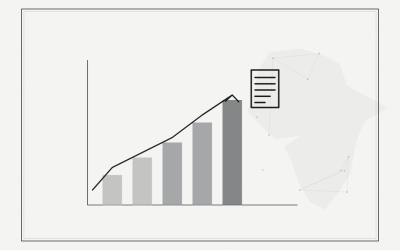
Africa is told to cut emissions and to grow, at once. Chinese energy projects sit on the seam between those demands – and which way they tilt has shifted.
Rail’s return: Africa’s revival inside a larger modernisation arc
Rail is back on Africa’s agenda after decades of decline. The new lines are part of a wider story – and bounded by a financing gap measured in tens of billions.

Five Signals That Will Determine the Future of Kafue National Park’s Conservation-Led Repositioning
Five measurable signals – wildlife recovery, poaching pressure, revenue, community benefit and credible recognition – that will decide Kafue’s future to 2031.

The dragnet argument: why the China-Africa story is bigger than its biggest project
Every headline picks one mega-project to judge China in Africa. The aggregate – 13,000 km of rail and road, 170 schools, 100 ports – tells a different and harder-to-dismiss story.

Green Development: From Side Project to the Centre of China-Africa Energy
Solar fields in Morocco, wind farms in South Africa, hydropower in Uganda – China’s clean-energy projects in Africa have moved from the margins to the mainstream of the relationship.
South-South Exchange: China-Africa Ties as Knowledge, Not Only Capital
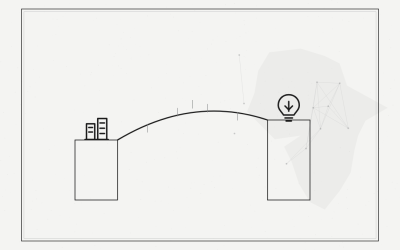
The roads and ports dominate the headlines, but the more durable transfer between China and Africa may be training, research centres and technical know-how.
Joint Modernization: The Idea China Is Using to Reframe Its Africa Role
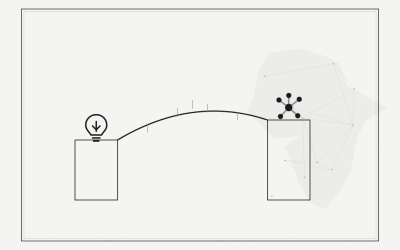
Beijing now describes its African partnership through six characteristics of modernization, positioning itself as a fellow traveller rather than a creditor.

Building the Next Decade of Lusaka as the Capital of Exile Politics
Can Lusaka be recognised as a major African city of liberation memory by 2031? Three scenarios and the indicators to track toward that outcome.

Congo’s cobalt ban turned a regulator’s decision into the market’s price sheet
London cobalt rose from US$21,171 a tonne on 3 February to US$33,466 on 22 August 2025 after Congo suspended exports. For buyers and lenders, the regulator’s decision text is now primary market evidence.

Cobalt’s rulebook: how one Congolese notice moved the global price
ARECOMS extended Congo’s cobalt export suspension on 21 June 2025, and London cathode rose about 58 per cent from February. The episode shows why enforceable rules and verifiable evidence now decide cobalt due diligence.

Cobalt’s rulebook in June 2025: Congo extends its ban, and the evidence is thin
On 21 June Congo’s strategic-minerals regulator extended its cobalt export suspension by three months, citing stockpiles. The BCC’s June data shows what can be checked, what cannot, and why price quotes differ by US$3,000.

The cobalt rulebook of May 2025: a decree, a market report and a mine certificate
An ARECOMS decree, a Cobalt Institute report and a Copper Mark award reshaped cobalt due diligence in 2025. The price rose 40 per cent, but the documents decide who may sell and who may buy.