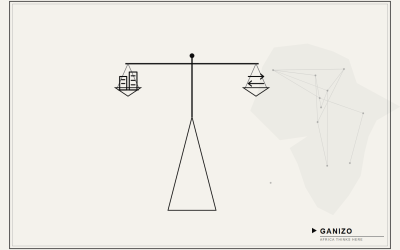
ARECOMS controls the export gate and the stock claim, and buyers are repricing every contract around its calendar.
A regulator in Kinshasa has shown that one notice can move the global cobalt price. When the authority for strategic mineral markets, ARECOMS, suspended cobalt exports on 22 February 2025 and extended the suspension on 21 June, London cathode went from $21,171 a tonne at the end of February to $33,554 by 25 July, on the central bank’s own price table. The rule changed behaviour because it rested on a stock claim that buyers could not check and could not afford to ignore.
That is the real subject of Congo’s July. Markets here are moved less by new laws than by who holds enforceable authority over a border and who publishes the numbers that justify its use. Commercial innovation, in this case the idea of managing a commodity price from the supply side, depends on both.
A notice with a border behind it
ARECOMS controls the one point every tonne must cross, which is why its word carries weight.
Ecofin Agency reported that the extension, announced on Saturday 21 June, rested on “significant market stockpiles”, and that the authority said it might amend, extend or end the suspension at its next review, with an export quota system under discussion as an alternative. The original four-month ban had been imposed in February after a long slump in prices. Congo supplies about 70 per cent of the world’s cobalt, so a regulator that holds the exit gate holds the marginal tonne.
The logic is simple. Exported cobalt crosses a limited number of borders and ports, so a rule at the exit is enforceable by officials in a handful of places, far cheaper to police than a production cap across hundreds of industrial and artisanal sites. That enforceability is the asset. A rule that cannot be enforced informs nobody.
The evidence layer: what buyers could and could not check
The price move came from a stock claim; the verification gap is the risk.
ARECOMS cited oversupply. The central bank’s weekly statistics tell part of the story: the digest of 30 July records cobalt output of 41,721 tonnes in the first quarter of 2025, set against 198,777 tonnes for the whole of 2024. A buyer reading that cannot reconcile quarterly output, producer inventories and the regulator’s stock claim, because the inventory sits in producers’ yards and traders’ warehouses and is reported by no public source.
Company disclosures partly fill the gap. CMOC, the largest producer, lifted cobalt output 13 per cent to 61,073 tonnes in the first half while unable to ship, per Ecofin, and its trading arm IXM declared force majeure on cobalt delivery contracts after the extension. Each of those facts is a due-diligence event. A refiner buying against a contract with an exposed delivery clause has to read the regulator’s calendar as carefully as its own warehouse stock.
The transparency track beside it
The International Monetary Fund is asking Kinshasa for the kind of evidence that makes rules predictable.
The IMF’s country report for the first review, approved by its board on 2 July, sets out what the government has committed to publish. New and renegotiated mining contracts are a continuous structural benchmark. In March 2025 the authorities published amendments 4 and 5 to the Kipushi zinc mine contract, and in April they published the 2023 financial statements of Gécamines, with auditors’ comments, promising the 2024 accounts in 2026. A further benchmark, due in September 2025, creates a standing committee to centralise data from the extractive sector; another, due in August 2026, requires mining projects representing 80 per cent of exports to be inside a fiscal model of resource revenues.
These are slow instruments, and they matter for cobalt precisely because the ban showed how much an unpublished number can move. The EITI validation of October 2022, which the same report cites, scored Congo highly overall but flagged that publishing the beneficial owners of mining contracts needed work. A buyer that cannot see who owns the counterparty cannot price the counterparty’s compliance risk.
How the rule changes what a business does
Contract terms, inventory and sourcing maps are all being rewritten around a regulator’s calendar.
The first adaptation is contractual. IXM’s force majeure notice shows where the cost lands when a regulator extends a ban mid-contract, and any buyer signing now has reason to tie delivery windows to ARECOMS review dates and to allocate that cost in writing. The second is physical. Producers such as CMOC keep output flowing at the mine while the metal sits in Congo, and price discovery happens in London. Stock held outside Congo became worth more as the ban lengthened, so the policy also created winners that were not Congolese.
The third is geographic, and here the argument is inference rather than record. A buyer facing a second extension has reason to look at other origins and at recycled metal, so a regulator’s success in raising the price can shorten the patience of its customers.
Two diplomatic texts landed in the same weeks. The Washington agreement between Congo and Rwanda was signed on 27 June, with a regional economic integration framework centred on traceable trade in critical minerals, and the Congolese government and the M23 signed a declaration of principles in Doha on 19 July. Neither is a mining regulation, yet both depend on the same capacity: a state that can document where a tonne came from and where it went. Traceability is the common currency of the peace process, the IMF programme and the cobalt quota debate.
What to do with the signal
Treat regulatory dates as price events and demand the data behind them.
Buyers and investors should do three things this quarter. Put ARECOMS review dates, currently 21 September, into the same risk calendar as shipping and financing deadlines. Ask counterparties for inventory and ownership evidence in the contract itself, as a representation rather than a courtesy. And track the IMF’s benchmarks as a leading indicator: each published contract and each completed data committee narrows the information gap that made a single notice so powerful. Congo’s cobalt market will be cheaper to trade when the numbers behind the rules are public.
Sources
- Banque Centrale du Congo – Condensé hebdomadaire d'informations statistiques n°30 (30 July 2025)
https://www.bcc.cd/statistiques/condense-informations-statistiques/2025-07-30 - Ecofin Agency – DRC Prolongs Cobalt Export Suspension Amid Market Oversupply (June 2025)
https://www.ecofinagency.com/news-industry/2306-47378-drc-prolongs-cobalt-export-suspension-amid-market-oversupply - Ecofin Agency – DR Congo: CMOC Boosts Cobalt Output by 13% in First Half of 2025 Despite Export Ban (July 2025)
https://www.ecofinagency.com/news-industry/1507-47697-dr-congo-cmoc-boosts-cobalt-output-by-13-in-first-half-of-2025-despite-export-ban - International Monetary Fund – Democratic Republic of the Congo: First Review Under the Extended Credit Facility Arrangement, Country Report No. 25/195 (July 2025)
https://www.imf.org/-/media/files/publications/cr/2025/english/1codea2025002-source-pdf.pdf - Banque Centrale du Congo – Notes de conjoncture (publications page)
https://www.bcc.cd/publications/notes-de-conjoncture