With the franc steady all year, the rise in Kinshasa food prices is about roads and risk, not money.
Food in Kinshasa cost 8.4 per cent more in the third week of August 2025 than in the same week of 2024. Transport cost 12.8 per cent more. The gap between those two numbers, reported in the Banque Centrale du Congo’s digest of 27 August from the national statistics institute’s price indices, is the quiet story of the Congolese food economy: the thing that rose fastest was the cost of moving the food.
That matters because the franc did not cause it. The BCC’s indicative rate closed every month from January to July between CDF 2,847.66 and CDF 2,882.42 to the dollar. When the currency sits still and prices still climb, the pressure sits in roads, storage and risk.
Where the index says the pressure is
Food rose a little faster than the 8.1 per cent headline; transport and housing rose faster than food.
The BCC’s Kinshasa table puts the food and non-alcoholic beverage index at 1,577.8 in week 34 of 2025 against 1,456.1 a year earlier. The general index went from 1,712.6 to 1,850.6, an 8.1 per cent rise. Transport moved from 1,827.7 to 2,061.0. Housing, water and energy rose about 10 per cent.
A trader buying cassava flour, maize or palm oil at a provincial depot carries the transport line twice: once in the haulier’s tariff and once in the working capital tied up while a truck waits at a checkpoint or a broken bridge. Neither cost appears on the farm-gate price, and both appear on the Kinshasa shelf.
The east shows the sharper version
Where conflict closes routes, staples reprice in weeks, not quarters.
The World Food Programme’s IPC analysis of March 2025 counted 28 million Congolese in acute hunger, 3.9 million of them at emergency level, with staples up to 37 per cent dearer than in December 2024 in the conflict-hit east. Kinshasa’s 8.4 per cent is the mild end of the same mechanism. The east pays a security premium on top of the freight premium.
In November 2024 the programme’s country director, Peter Musoko, argued that 2025 needed more work on resilience and food systems, not only emergency rations. Nothing in the August price data suggests the freight problem has eased since. Restaurants and hotels in the same Kinshasa table rose 10.9 per cent, which shows the cost passing on to every buyer of prepared food as well.
The state’s own farm, as a warning
Bukanga Lonzo shows what large-scale production costs when roads, soil and storage are not solved first.
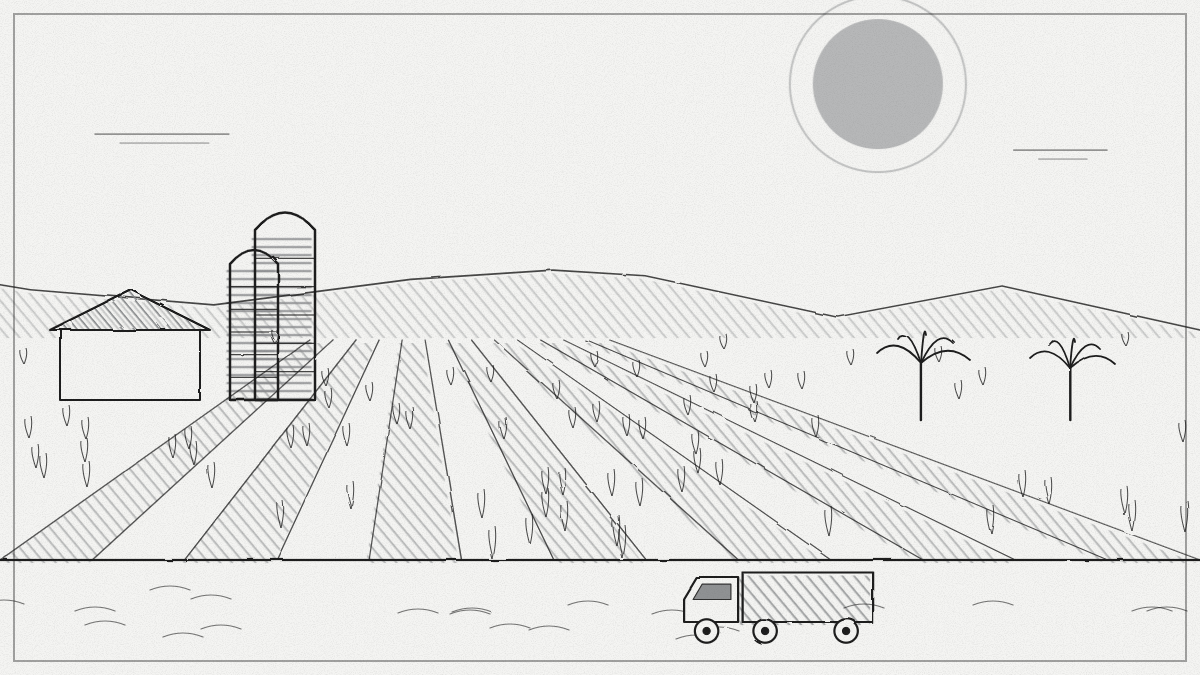
The Bukanga Lonzo agro-industrial park, 80,000 hectares across Kwango and Kwilu about 250 kilometres from Kinshasa, was meant to produce 350,000 tonnes of maize a year. A 2021 relaunch produced 6,000 tonnes on 1,500 hectares. Heshima Magazine’s June 2025 account lists the constraints: sandy soil, thin storage and logistics, limited power and road access, and looting that stopped work again in 2024. It reports that the government announced a revival plan in June 2025, built on a prior audit, private capital and back pay of 30 months of arrears.
A park that has to truck its crop 250 kilometres on roads it does not control has built the farm and left out the freight. Kinshasa’s price index is what that omission looks like in a household budget.
What a food business does with this
Treat the transport index as the leading indicator and contract for the road before the harvest.
For a processor, retailer or importer, the useful reading of August is that the next 12 months of food prices will be set by transport tariffs rather than by the dollar, so long as the franc holds. That argues for three decisions: fix haulage and storage on multi-season terms at origin, buy from the districts whose roads are in use rather than those with the best soil on paper, and treat any revived park as a supply contract only once a named hauler and a storage operator are in it. Congo’s farmland is not the shortage. The scarce asset is a dry, guarded kilometre between the field and the market.
Sources
- Banque Centrale du Congo – Condensé hebdomadaire d'informations statistiques (27 August 2025)
https://www.bcc.cd/statistiques/condense-informations-statistiques/2025-08-27 - World Food Programme – Conflict and rising food prices drive Congolese into one of the world's worst food crises according to new IPC data (27 March 2025)
https://www.wfp.org/news/conflict-and-rising-food-prices-drive-congolese-one-worlds-worst-food-crises-according-new-ipc - World Food Programme – No relief from food insecurity in the Democratic Republic of the Congo, as a quarter of the population continue to face hunger (21 November 2024)
https://www.wfp.org/news/no-relief-food-insecurity-democratic-republic-congo-quarter-population-continue-face-hunger - Heshima Magazine – Bukanga Lonzo, ce parc agro-industriel fantome, peut-il revivre ? (4 June 2025)
https://heshimardc.net/v1/2025/06/04/bukanga-lonzo-ce-parc-agro-industriel-fantome-peut-il-revivre/