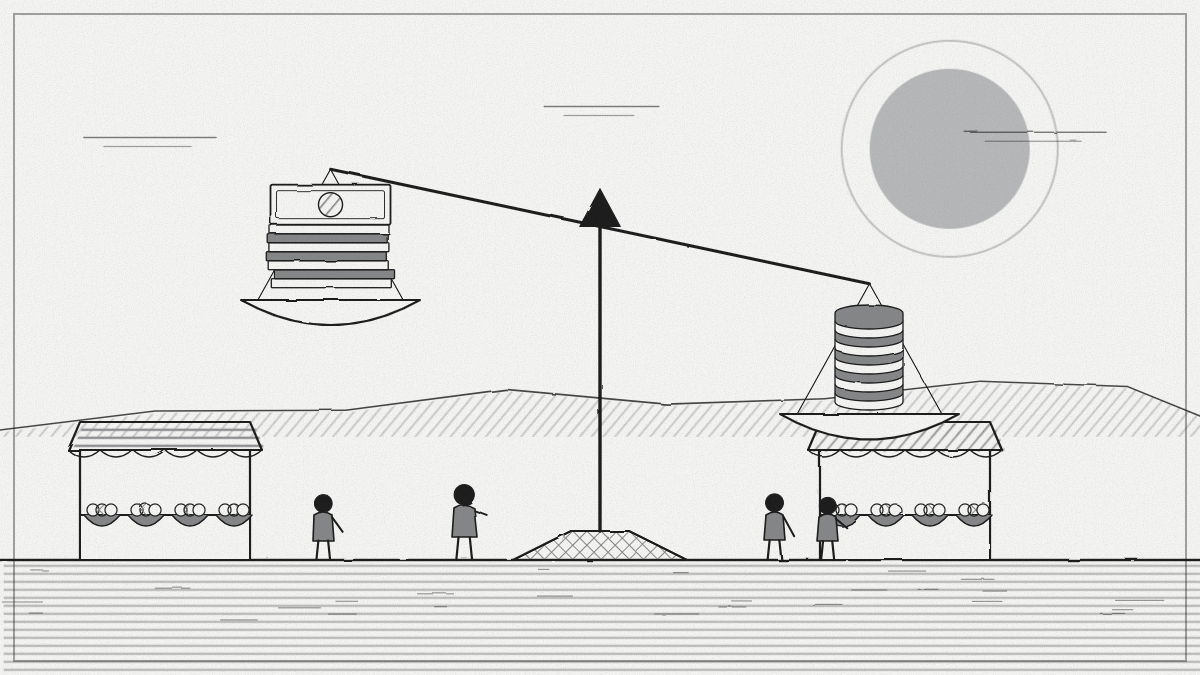
A 0.6 per cent official slide hid a gap of about 9 per cent between the central bank’s rate and the street’s.
Congo’s franc began 2023 under pressure, and the pressure shows in the gap between two rates. The Banque Centrale du Congo (BCC) put its indicative rate at 2,028.70 francs to the dollar on 20 January, 0.6 per cent weaker than the 2,016.57 on 30 December. On the Kinshasa street market, the dollar changed hands above 2,200 francs, about 9 per cent higher.
That gap is the January story. The official rate measures where the BCC’s channels clear. The street rate measures where marginal dollars are bought, and retail prices tend to follow the street.
The official creep
The indicative rate rose by about two francs a day in the second week of January, with no single jump.
The BCC’s weekly digest records the pattern. The rate was 2,020.94 on 9 January, then 2,022.86, 2,025.03 and 2,027.77 on successive days, before settling at 2,023.06 on 13 January and 2,028.52 on 18 January. The BCC’s own variation table shows 0.6 per cent of cumulative depreciation since the start of the year, against 0.8 per cent for all of 2022.
Annualised, a 0.6 per cent move in twenty days is a pace of roughly 11 per cent a year. The 2023 budget, by contrast, assumes a year-end rate only 0.9 per cent weaker than the end-2022 rate. Either the BCC slows the creep, or the finance law’s exchange-rate line will come under strain well before year-end.
Meanwhile the euro cost of importing moved too. The indicative rate for the euro rose from 2,141.58 francs on 30 December to 2,199.33 on 20 January, a rise of 2.7 per cent.
Three prices for one dollar
The indicative rate is a trade average, the parallel rate is a survey, and mobile-money wallets offered a third quote.
The BCC computes the indicative rate as a volume-weighted average of trades by the central bank, licensed banks and bureaux. It therefore reflects dollars sold into regulated channels. The parallel rate comes from a survey of money-changers in the main exchange places of Kinshasa.
Deskeco reported on 13 January that the parallel market had passed 2,200 francs, that an Equity BCDC cash machine quoted 2,195, and that an Orange Money exchange screen quoted about 2,050. The paper also noted that the 2023 budget assumed an average rate of 2,021.94 and a year-end rate of 2,034.85, so the market was already trading above the finance law’s year-end assumption. The BCC’s 20 January rate left only about six francs, 0.3 per cent, of headroom to that year-end figure.
Reserves dipped just as pressure rose
Gross reserves fell from US$4.38 billion to US$4.18 billion in three weeks, and import cover from 2.63 to 2.26 months.
Sika Finance reported that reserves stood at US$4.3 billion at the end of December, up 60 per cent on a year earlier and the highest in at least a decade, thanks to two IMF disbursements totalling US$406 million. The BCC’s table shows the stock at US$4,382.9 million on 30 December and US$4,176.6 million on 20 January, a fall of about US$206 million, or 4.7 per cent.
The table does not explain the decline, and a dip of that size can reflect payments as well as intervention. It matters because reserves are the only thing standing between a creeping official rate and the street’s 2,200.
Why it is a pricing problem as well as a treasury one
Importers reprice at the street rate, and weekly inflation of 0.8 per cent pointed the same way.
The BCC’s price index reached 13.4 per cent year on year by the third week of January, with a weekly rise of 0.82 per cent in the national index and 0.85 per cent in Kinshasa. Importers who replace stock at 2,150 to 2,200 reprice at that level, whatever the central bank publishes.
For a business the response is concrete. Reprice imported inventory against the street rate, not the official one: on a US$100,000 order the gap between 2,028 and 2,200 francs is CDF 17.2 million, and keep dollar invoicing where suppliers accept it. If you can buy through a bank at close to 2,028, buy early and in size, because that channel narrows when the gap widens. Set a trigger on the spread between the two rates: a gap above 5 per cent is already a warning, and January’s 9 per cent is well past it.
Sources
- Banque Centrale du Congo – Condensé hebdomadaire d'informations statistiques n°03 (25 January 2023)
https://www.bcc.cd/statistiques/condense-informations-statistiques/2023-01-25 - Deskeco – RDC : la monnaie nationale s'emballe à plus de 2200 FC le dollar américain à Kinshasa (13 January 2023)
https://deskeco.com/2023/01/13/rdc-la-monnaie-nationale-semballe-plus-de-2200-fc-le-dollar-americain-kinshasa - Sika Finance – RD Congo : les réserves de change bondissent de 60% à 4,3 milliards de dollars (27 January 2023)
https://www.sikafinance.com/marches/rd-congo-les-reserves-de-change-bondissent-de-60-a-4-3-milliards-de-dollars_38996 - Banque Centrale du Congo – Notes de conjoncture (consulted January 2023)
https://www.bcc.cd/publications/notes-de-conjoncture


