A mine pays for the fast route to the Atlantic while the Treasury’s capital line stays at 7.7 per cent.
In the Treasury table of the BCC’s 25 April 2025 digest, capital spending stood at CDF 670 billion, or 7.7 per cent of the CDF 8,753 billion spent so far this year. In 2024 the equivalent line was CDF 3,538 billion, 12.2 per cent of outlays. Roads, rail, power and ports in Congo are financed in announcements long before they are financed in cash, and the gap between the two is where projects stall.
The April evidence offers a clean contrast. The most visible piece of infrastructure change in the south is being paid for by a mining company, not by the budget.
Where the money is actually moving
A private trial of the Lobito rail route cut transit time by about two thirds.
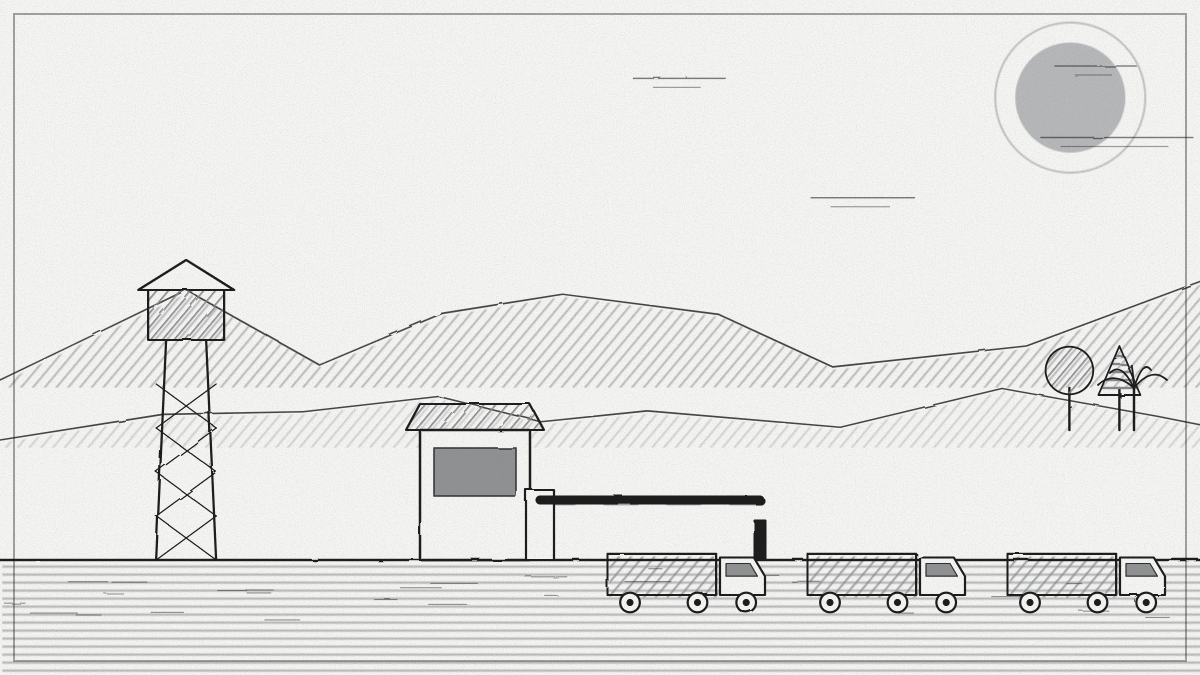
Ivanhoe Mines reported on 8 January that trial shipments of Kamoa-Kakula concentrate over the Lobito Atlantic Railway corridor took 6 to 8 days, against 20 to 25 days by truck to Durban, and that it expected 3.5 to 4 days as volumes ramped up. That release also recorded a 2 January generator fire that damaged 36 MW of backup diesel capacity, repairs to which would take three to six months. The company, not the state, carries both the logistics bill and the power risk.
For the copper belt, the shortest route to the Atlantic is therefore being tested at a mine’s own cost, with a private operator’s schedule, while public capital lines stay thin.
The Treasury’s arithmetic
Pay and exceptional spending take about eight francs for every one spent on capital.
The cumulative Treasury table, which the BCC flags as provisional and partly carried forward, shows CDF 2,902 billion on pay and CDF 2,775 billion on exceptional expenditure beside CDF 670 billion of capital spending. At the BCC’s indicative rate of CDF 2,855 that capital line is roughly US$235 million for four months. The same table shows a cash deficit of CDF 1,817 billion.
A ministry that has a financing agreement still depends on the Treasury releasing franc counterpart funds, paying contractors on certified invoices and clearing customs on imported equipment. When cash is tight and the deficit is open, disbursement lags approval. That lag is invisible in a project pipeline report and obvious in a contractor’s receivables.
Finance approved is not finance spent
The IMF programme lists governance and the business climate as aims, and execution is where they are tested.
The US$1,729 million Extended Credit Facility the IMF approved in January is a financing line for the state’s macroeconomic framework, not for any particular road. Its effect on infrastructure is indirect: it sets the conditions under which donors and banks will lend, and the pace at which the Treasury can afford its counterpart share. April’s digest shows reserves at US$6,738 million and a franc anchored at CDF 2,855, which makes the macro frame the steadiest part of the chain.
In the east, execution is physical as well as fiscal. After M23 seized Goma and Bukavu, commercial banks and the central bank’s provincial branch closed, VOA reported on 12 March. Contractors in those provinces cannot be paid through the normal system, which is its own reason no financed project there can advance.
A ladder for contractors
Price each project by its stage on the lifecycle ladder, not by its headline value.
For a contractor, supplier or investor, the useful discipline is to place each project on a ladder: proposed, approved, financed, contracted, under construction, commissioning, operational. The usual cluster of delays sits between financed and contracted, and between contracted and under construction, where Treasury cash and customs clearance decide pace.
Three tests follow. Ask whether the counterpart funds are budgeted and released. Ask whether the contract is payable in dollars through an offshore account. And ask whether the route depends on the east, where the payment system is closed. Projects that pass all three move on a private clock. Those that fail them wait for the Treasury. The next checkpoint is whether the capital line in the BCC table rises above CDF 1,000 billion by the end of the second quarter.
Sources
- Banque Centrale du Congo – Condensé hebdomadaire d'informations statistiques n°17 (30 April 2025)
https://www.bcc.cd/statistiques/condense-informations-statistiques/2025-04-30 - Ivanhoe Mines – Ivanhoe Mines provides 2024 production results, 2025 production guidance (8 January 2025)
https://www.ivanhoemines.com/news-stories/news-release/ivanhoe-mines-provides-2024-production-results-2025-production-guidance/ - International Monetary Fund – Democratic Republic of the Congo: Request for ECF and RSF Arrangements, Country Report No. 25/23 (January 2025)
https://www.un.org/peacebuilding/sites/default/files/documents/imf_-_drc_report_on_ecf_rsf_approval_january-2025.pdf - VOA Africa – Congo bank closures bite consumers, hamper local economy in eastern DRC (12 March 2025)
https://www.voaafrica.com/amp/congo-bank-closures-bite-consumers-hamper-local-economy-in-eastern-drc/8008053.html