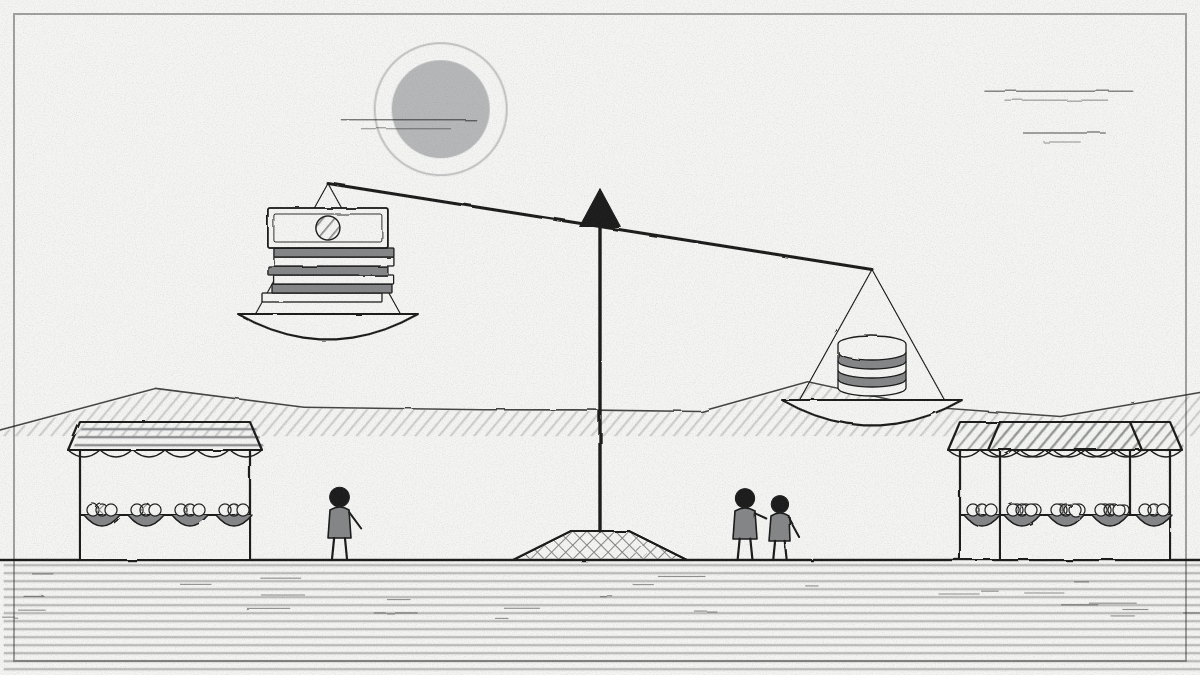
The BCC’s February rate barely moved, but it was set by about US$5 million of daily turnover.
The Banque Centrale du Congo’s indicative rate for the dollar closed February at CDF 2,035.98, against CDF 2,032.50 on 31 January. That is a slide of 0.17 per cent in a month and 0.96 per cent since the last day of 2022, when the rate stood at CDF 2,016.57.
The calm is real, but so is its limit. The BCC’s weekly digest records US$107.1 million of recorded foreign-exchange turnover for the whole of February, about US$5.4 million per trading day. The same digest puts reserves at US$4,329.7 million, or 2.34 months of imports, which implies a monthly import bill near US$1.85 billion. A stable price set in a market that size is a narrower signal than it looks.
For a Congolese business the sensible reading is that the official checkpoint measures the banking window, not the price at which most dollars in the economy change hands.
How the number is made
The indicative rate is a turnover-weighted average, so a small market sets it.
The BCC’s method weights the average buying rate by volume bought and the average selling rate by volume sold, pooling the central bank, licensed banks and bureaux de change. February’s pool held US$86.0 million of purchases and US$21.1 million of sales, almost all through commercial banks. Bureaux de change contributed US$0.06 million. The central bank recorded nothing on either side.
Its last intervention was a US$50 million sale on 13 January, and the next came on 7 March. February therefore passed without a visible hand on the scale. The indicative rate printed between CDF 2,032.46 on 8 February and CDF 2,036.00 on 23 February, a band of less than four francs.
The crosses moved, the dollar did not
Euro and SDR quotes swung with the global dollar, and the franc followed the dollar.
Against the euro the franc moved the other way. The BCC’s cross rate went from CDF 2,206.58 per euro on 31 January to CDF 2,145.45 on 28 February, down 2.8 per cent. The SDR slipped from CDF 2,746.18 to CDF 2,703.36, down 1.6 per cent.
Neither move is a Congolese event. The franc tracks the dollar, so a firmer dollar abroad makes the euro and the SDR cheaper in francs. A Kinshasa importer paying a Belgian supplier in euros enjoyed a modest February discount. One paying a Dubai or Shenzhen exporter in dollars saw a flat month.
What holds the line
Tight money, reserves and Fund money explain the stillness; none is free.
Three supports sit behind the quiet. The policy rate has stood at 8.25 per cent since the committee’s decision of 24 November 2022, which AWA Afrika reported alongside annual depreciation of 0.69 per cent on the official rate and 2.52 per cent on the parallel rate in mid-November. Reserves held near US$4.3 billion through the month. And on 20 December the IMF Board completed the third review of the Extended Credit Facility, releasing about US$203 million that the Fund said would help reinforce international reserves.
The price of this calm is a negative real return on francs. National inflation reached 14.4 per cent year on year in the week to 19 February, up from 13.4 per cent in January, and the BCC’s own table puts the real re-discount rate at minus 7.6 per cent. Anyone holding francs is losing purchasing power against both prices and, over the year, against the dollar. A firm that can pay suppliers in dollars has little reason to hold francs for long.
Reading a quiet rate
Price to the dollar, and watch two prints that would end the calm.
A quiet rate invites complacency, and complacency is the expensive response. Exporters with franc costs, such as transport and wages in Lubumbashi or Kolwezi, benefit from a franc that is not yet strengthening. Importers with franc revenues carry the exposure, and they carry it against a currency whose anchor is a policy rate already below inflation.
Two prints in the weekly digest would end the quiet. The first is the central bank’s own sales line, zero in February and US$50 million twice in the first ten weeks of the year. When it moves from rare to routine, the authorities are defending the rate. The second is reserve cover, down from 2.63 months at the end of 2022 to 2.34 months, partly because the digest’s import base was reset higher for 2023.
For treasurers the working rule is plain. Invoice and index contracts in dollars where the counterparty allows it, hold franc balances only for the payroll cycle, and review any franc price list the week the BCC’s intervention line stops being blank.
Sources
- Banque Centrale du Congo – Condensé hebdomadaire d'informations statistiques n°07 (22 February 2023)
https://www.bcc.cd/statistiques/condense-informations-statistiques/2023-02-22 - World Bank – Finances One, Democratic Republic of Congo country page
https://financesone.worldbank.org/countries/Congo%2C%20Democratic%20Republic%20of - AWA Afrika – RDC : la Banque Centrale du Congo relève son taux directeur de 7,5 à 8,25 % (November 2022)
https://awa-afrika.com/a-la-une/rdc–la-banque-centrale-du-congo-releve-son-taux-directeur-de-75-a-825- - IMF – Executive Board concludes 2022 third review under the ECF arrangement with DRC (20 December 2022)
https://www.imf.org/en/news/articles/2022/12/20/pr22452-imf-executive-board-concludes-2022-third-review-under-the-ecf-arrangement-with-drc


