Pool-House Reform Opens the Door to More Homeowners
Public housing schemes tend to fail at the same join: they build the houses but withhold the ownership. A tenant who can occupy a state-built home but never own it is a tenant forever, with no stake to maintain and no asset to build on. The reform of Botswana's...
TEDA Suez: How a Chinese desert zone became Egypt’s industrial showpiece
Property - Infrastructure & Megaprojects · Editorial By Moakanyi Magazine · China-in-Africa · June 2026 The pitch was that a Chinese-built industrial park on Egypt's Red Sea coast would seed a manufacturing base for the whole region. The counter-question,...
Dukem’s Wager: What One Chinese Industrial Zone Taught Ethiopia About Factories
Property - Infrastructure & Megaprojects · Editorial By Moakanyi Magazine · China-in-Africa · June 2026 Industrial policy in Africa is usually written as a national plan, debated in capitals and measured in five-year targets. The Eastern Industrial Zone tells a...
Generate, Carry, Build: Reading Africa’s Power Sector as One Chain
Property - Infrastructure & Megaprojects · Editorial By Moakanyi Magazine · China-in-Africa · June 2026 Power generation, transmission and clean industrialisation are usually treated as three separate stories with three separate budgets and three separate...
The Wires Between: Why Transmission Earns Its Own Story, Not a Footnote
Property - Construction & Engineering · Editorial By Moakanyi Magazine · China-in-Africa · June 2026 Generation makes the news; transmission makes the footnote. Yet a megawatt that cannot reach a load is a megawatt wasted, and China's own white paper figures...

Mombasa-Nairobi SGR: a US$3.6bn corridor reset that still has to pay for itself
The SGR cut Mombasa-to-Kampala cargo time from 18 days to three. It also handed Kenya its largest-ever loan, equal to about 6% of GDP, and a railway that has run at an operating loss.
Roads, Rails and Wires: China’s African Build-Out and the Bill That Follows
China reports nearly 100,000 km of roads and over 10,000 km of railways built across Africa. Kenya’s flagship line shows why the build matters – and why the repayment terms matter as much.

Africa CDC’s New Home: A US$80 Million Headquarters and a Lesson in Health Sovereignty
China built Africa’s disease-control headquarters in Addis Ababa after a US retreat. The pandemic-born institution now houses its laboratories in a donated building.
A Gift in Glass and Concrete: The AU Headquarters and the Politics of Being Built
China funded the African Union’s US$200 million home in Addis Ababa. Its 99.9-metre tower honours African unity – and raises a question about who builds the continent’s institutions.

Local Councils Juggle Social Protection with Infrastructure Plans
Kgatleng and other councils tied child-grant registration to revenue drives while weighing roads and sewage – the everyday arithmetic of local government.
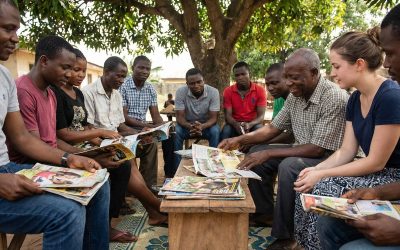
Living Brite: Solar Solutions for California and Florida Home Owners
The residential solar industry faces a peculiar paradox. Environmental urgency has never been clearer, technology costs have plummeted, government incentives remain robust, and homeowners express genuine interest in sustainability. Yet conversion rates lag far behind...

Congo’s infrastructure gap: Banana has a dredged channel, Inga 3 has a signature
By late August 2025 Congo had a World Bank approval for Inga 3 and a dredged channel at Banana, but state capital spending was 7.4 per cent of first-half outlays. Approval and execution are different clocks.

Inga 3’s US$250 million is approved, but Congo has spent a quarter of its capital budget
The World Bank approved US$250 million for the first phase of Inga 3 on 3 June, yet the IMF reports only 25 per cent of the 2025 investment budget implemented by end-May. Financing is not delivery.

Three Kongo Central megaprojects, three rungs: Inga, Banana and the road between
Inga 3 is financed for preparation, Banana has a named builder, and the Kinshasa-Banana road is still a signed agreement. The BCC shows capital spending at 29 per cent of 2024’s total by 21 May.
Banana port is rising but its highway is a protocol: Congo’s May 2025 infrastructure gap
Congo signed a protocol on 20 May for a 450 km Kinshasa-Banana highway with no budget or timetable, while Treasury capital spending ran at 7.7 per cent of outlays. Approval is not construction.
Congo’s infrastructure gap: CDF 670 billion of capital spend against a private rail trial
Capital spending was 7.7 per cent of Treasury outlays in the BCC’s April 2025 digest, while Ivanhoe’s Lobito trial cut transit to 6 to 8 days. Financing is announced faster than it is executed.

Congo’s budget plans 48% for investment; the Treasury paid 8.7% in eight weeks
Congo’s 2025 budget sets investment at CDF 21,964 billion, but capital spending to late February was CDF 377 billion. The Banana Port contract shows how projects advance when private and external money pays.
Foreign money for the Lobito rail, a 10 per cent capital budget at home: Congo’s build gap
BCC data show capital spending at 10 per cent of Treasury outlays by 14 February 2025. The Lobito rail corridor is financed from abroad; the roads and power around it still depend on a thin domestic budget.

Congo’s US$324 million-a-year Sicomines pledge meets its test: physical delivery
The amended Sicomines deal commits US$324 million a year to infrastructure while copper trades above its US$8,000 floor. Investors should watch tenders and procurement, not pledges.

How to Monetize Rural Land in Southern Africa
Rural land in Southern Africa holds untapped potential for economic development and wealth creation. With proper planning and innovative approaches, landowners can transform their properties into profitable ventures while contributing to local economies. This article...